

A luxurious bedroom should feel beautiful, comfortable, and personal not like a showroom where nobody is allowed to sit on the bed. The secret lies in balancing elegant furniture, thoughtful lighting, rich textures, and practical details. At Chahat Collections, we share home decor inspiration that helps readers turn everyday spaces into stylish, welcoming places. With the right choices, you can create a bedroom that feels sophisticated without filling it with expensive furniture or unnecessary decorations.
Whether you are refreshing your current bedroom or planning a complete makeover, small design decisions can make a noticeable difference. From choosing the right color palette to styling your bedside tables, every detail contributes to the overall atmosphere.
Let’s explore how to create a modern luxury bedroom with a designer touch while keeping comfort and everyday living at the center of your design.
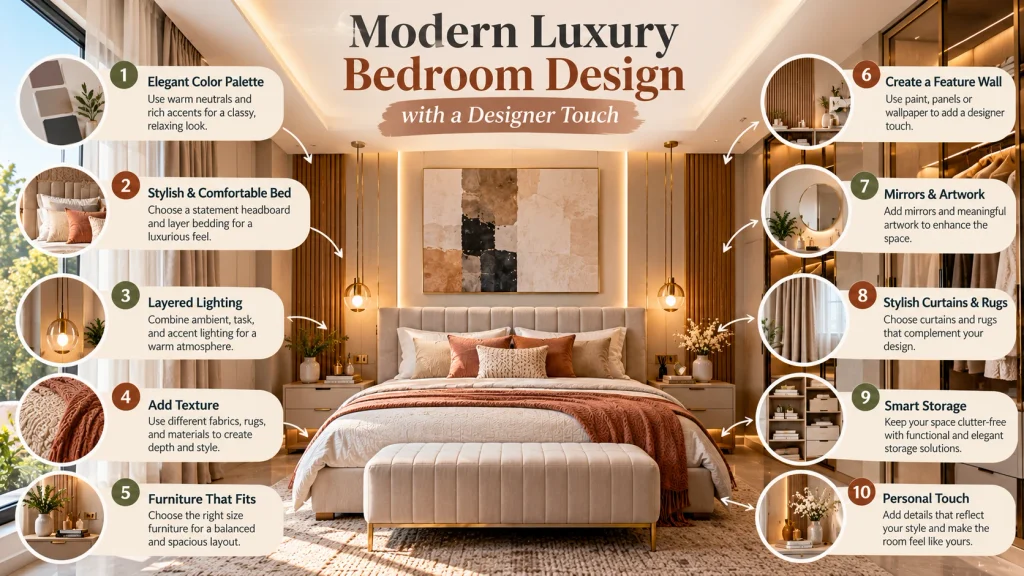
Table of Contents
What Makes Modern Luxury Bedroom Design Special?
Modern luxury bedroom design combines clean lines, comfortable furniture, carefully chosen materials, and a balanced color palette. Instead of relying on excessive decoration, it focuses on quality, proportion, lighting, and details that work together.
For example, an upholstered bed can become the room’s focal point when you pair it with coordinated bedding, simple bedside tables, and attractive lighting. You don’t need a chandelier the size of a small car to make the room feel special.
The designer touch comes from thoughtful choices. Furniture should suit the room, decorative elements should have a purpose, and the layout should make everyday activities easy.
Most importantly, luxury looks different for everyone. Some people prefer warm, hotel-inspired interiors, while others love contemporary spaces with darker colors and dramatic contrasts. Choose a style that reflects your taste rather than copying every trend you see online.
1. Choose a Sophisticated Bedroom Color Palette
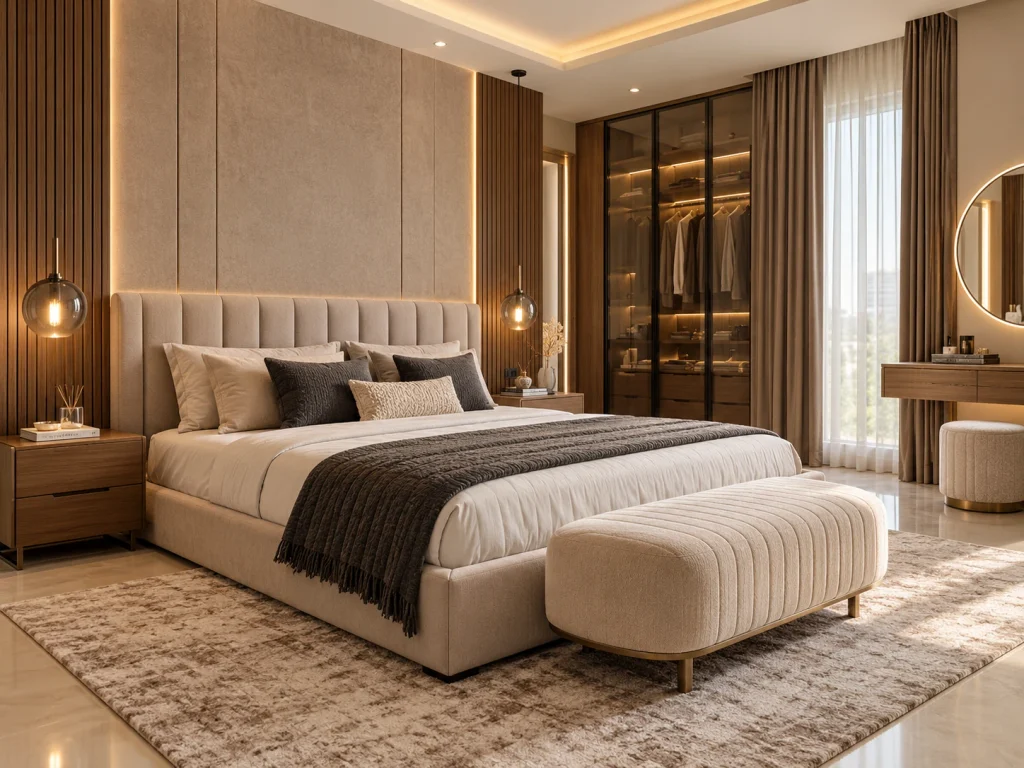
Color establishes the mood of your bedroom before you add a single decorative accessory.
Warm white, cream, beige, taupe, and soft gray create a calm foundation for a modern interior. These shades also work well with wood, stone-inspired finishes, metal accents, and textured fabrics.
If you prefer a richer look, introduce deeper colors through an accent wall, bedding, or upholstered furniture. Terracotta, charcoal, muted blue, and deep brown can add contrast without making every surface compete for attention.
How to create a balanced palette:
- Choose one main wall or furniture color.
- Add one or two complementary shades.
- Introduce contrast through cushions, artwork, or a throw.
- Repeat selected colors in different parts of the room.
For example, cream walls, a taupe headboard, and charcoal bedding can create a sophisticated combination. A small brass accent or warm wood finish adds another layer of interest.
Before committing to a paint color, view a sample in both daylight and artificial light. The same shade can look noticeably different throughout the day.
Image placeholder: A modern bedroom featuring warm beige walls, taupe upholstery, charcoal accents, and coordinated bedding.
2. Make the Bed the Main Design Feature
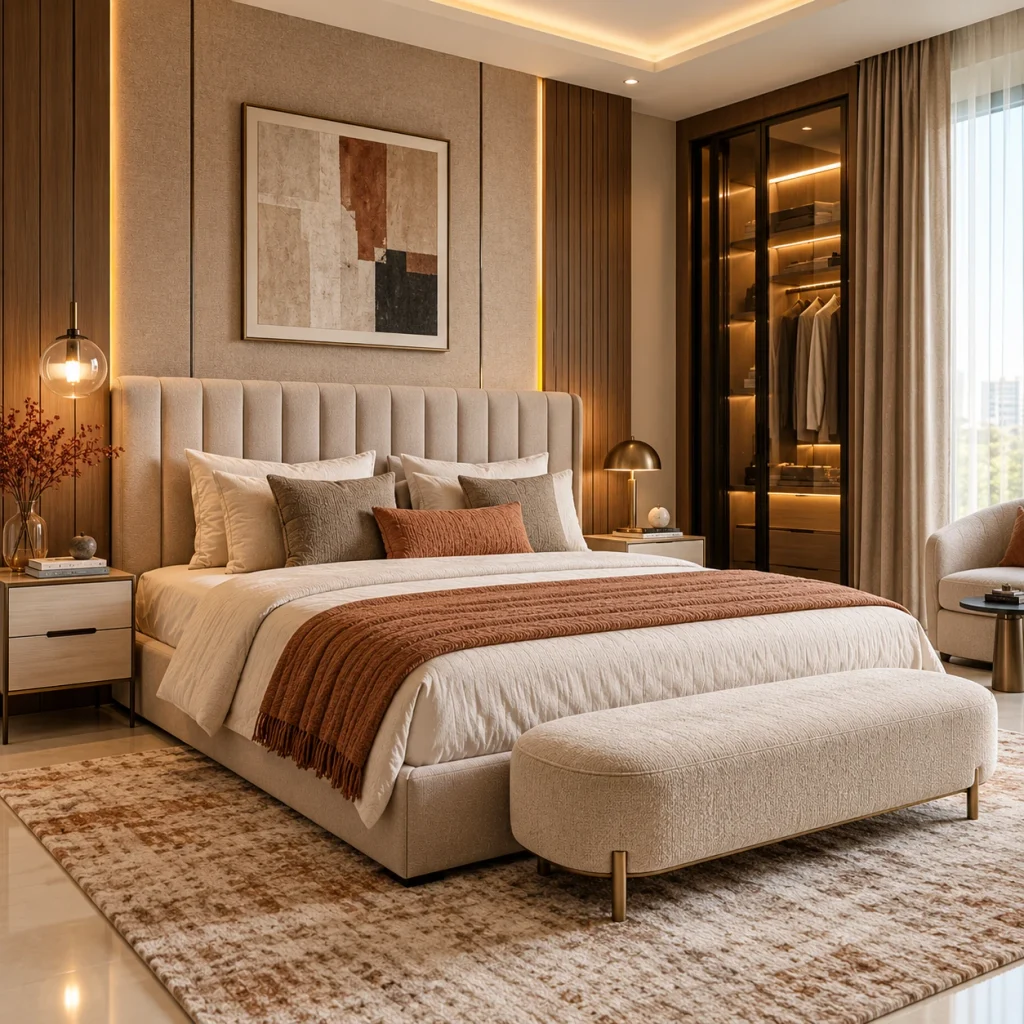
The bed usually occupies the largest area of a bedroom, so its design strongly influences the room’s appearance.
An upholstered headboard, a simple platform bed, or a design with clean wooden lines can establish the style you want. Choose a frame that suits your room’s dimensions and leaves enough space for comfortable movement.
For a more luxurious appearance, layer your bedding instead of relying on one flat color. Start with comfortable sheets, add a coordinated duvet or comforter, and finish with a few pillows and a textured throw.
Keep the arrangement practical. If you need ten pillows just to reach your sleeping position, your styling may be working harder than necessary.
Pay attention to fabric texture, too. Quilted bedding, woven throws, and soft cushions can create visual depth even when you use only two or three colors.
A well-made bed does not need excessive decoration. Coordinated fabrics, balanced proportions, and a suitable headboard often provide all the impact you need.
Image placeholder: An upholstered bed with layered neutral bedding, decorative cushions, and a textured throw.
3. Use Lighting to Create a Relaxing Atmosphere
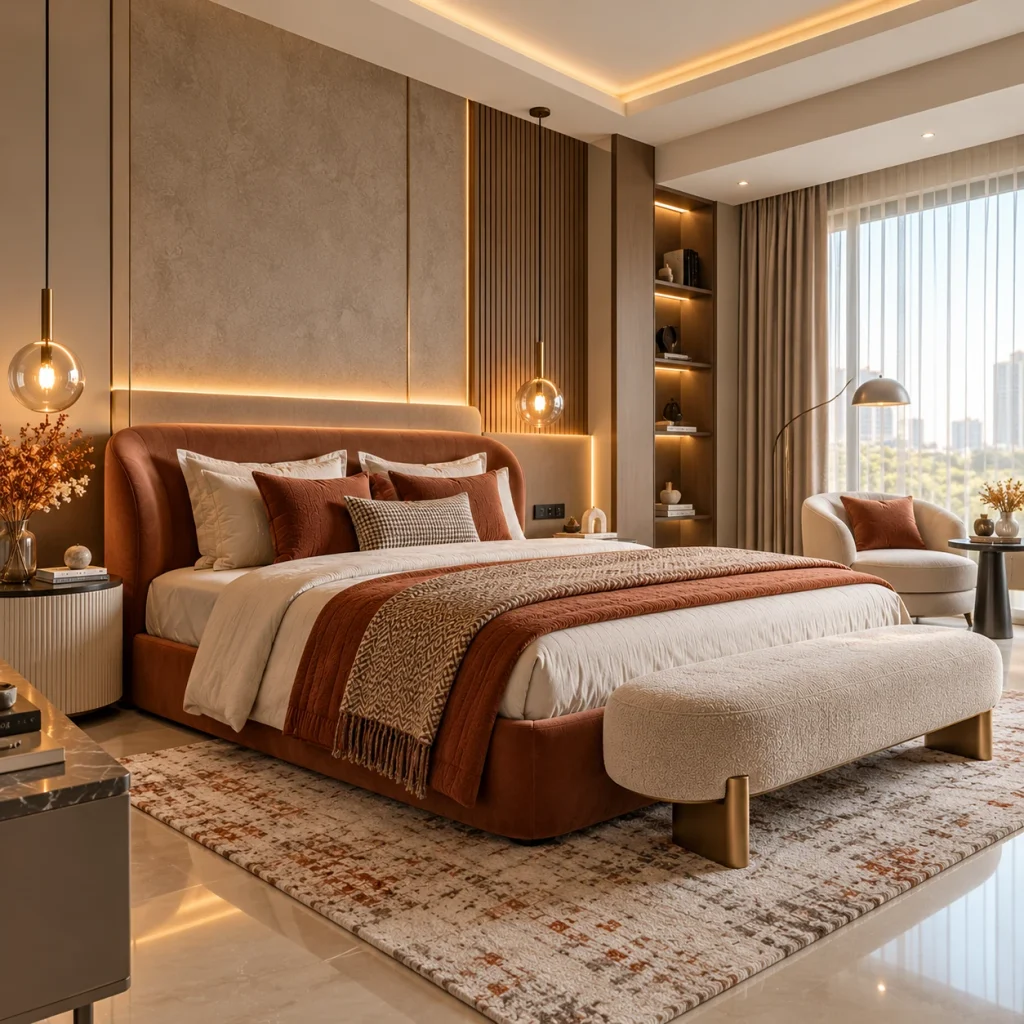
Lighting can change how your bedroom feels throughout the day. Bright general lighting helps with everyday tasks, while softer lighting creates a more relaxed atmosphere in the evening.
Instead of depending on one ceiling fixture, consider different types of lighting.
Ambient lighting provides general illumination. A ceiling fixture or suitable recessed lights can serve this purpose.
Task lighting helps with specific activities. Bedside reading lights or lighting near a dressing area can make daily routines easier.
Accent lighting highlights selected features, such as artwork, a textured wall, or a display shelf.
You can combine these options without installing elaborate lighting systems. A ceiling fixture, two bedside lights, and subtle accent lighting may provide enough flexibility for many bedrooms.
Choose light fixtures that complement your furniture and overall style. Pendant lights can create a striking look beside a bed, while wall-mounted fixtures can free up space on narrow nightstands.
Use dimmable lights where practical, and select bulbs that create the atmosphere you prefer. Make sure lighting around mirrors and dressing areas also supports the tasks you perform there.
Image placeholder: A bedroom with bedside pendant lights, soft indirect lighting, and a warm ceiling fixture.
4. Add Texture for a Richer Look
A room can have beautiful colors and furniture that still feel flat if every surface looks the same.
Texture adds depth without requiring more decorative objects. Consider combining smooth wood, soft upholstery, woven fabrics, a plush rug, and curtains with a subtle weave.
For example, a linen-look duvet, velvet-style cushions, and a textured rug can create contrast within a neutral palette. You can also introduce visual interest through fluted furniture panels, ribbed glass, or a headboard with a distinctive finish.
The key is to mix textures thoughtfully. Too many competing patterns can make the room feel busy, while a few complementary materials create a more intentional appearance.
Think about how materials feel as well as how they look. Bedding should feel comfortable against your skin, rugs should suit the way you use the room, and upholstery should be practical for your household.
Luxury should appeal to your senses without making everyday maintenance unnecessarily difficult.
5. Choose Furniture That Fits the Space
A designer-inspired bedroom needs furniture that suits its dimensions. Large furniture may look impressive in a spacious room but can overwhelm a smaller one.
Start by measuring the room, doorways, windows, and existing furniture. Plan enough clearance to open drawers, reach closets, and walk around the bed comfortably.
Choose bedside tables that provide useful storage without dominating the layout. A streamlined dresser can offer storage while keeping the room visually balanced.
If your bedroom has enough space, an upholstered bench at the foot of the bed can provide a convenient place to sit or arrange clothing. In a smaller room, skipping the bench may create a better layout.
Consider the furniture’s visual weight, too. A bulky dark dresser can feel more imposing than a lighter design with a similar footprint.
Practical tip: Sketch your furniture arrangement before buying anything. A few minutes with a measuring tape can prevent an expensive decorating mistake.
6. Create a Stylish Feature Wall
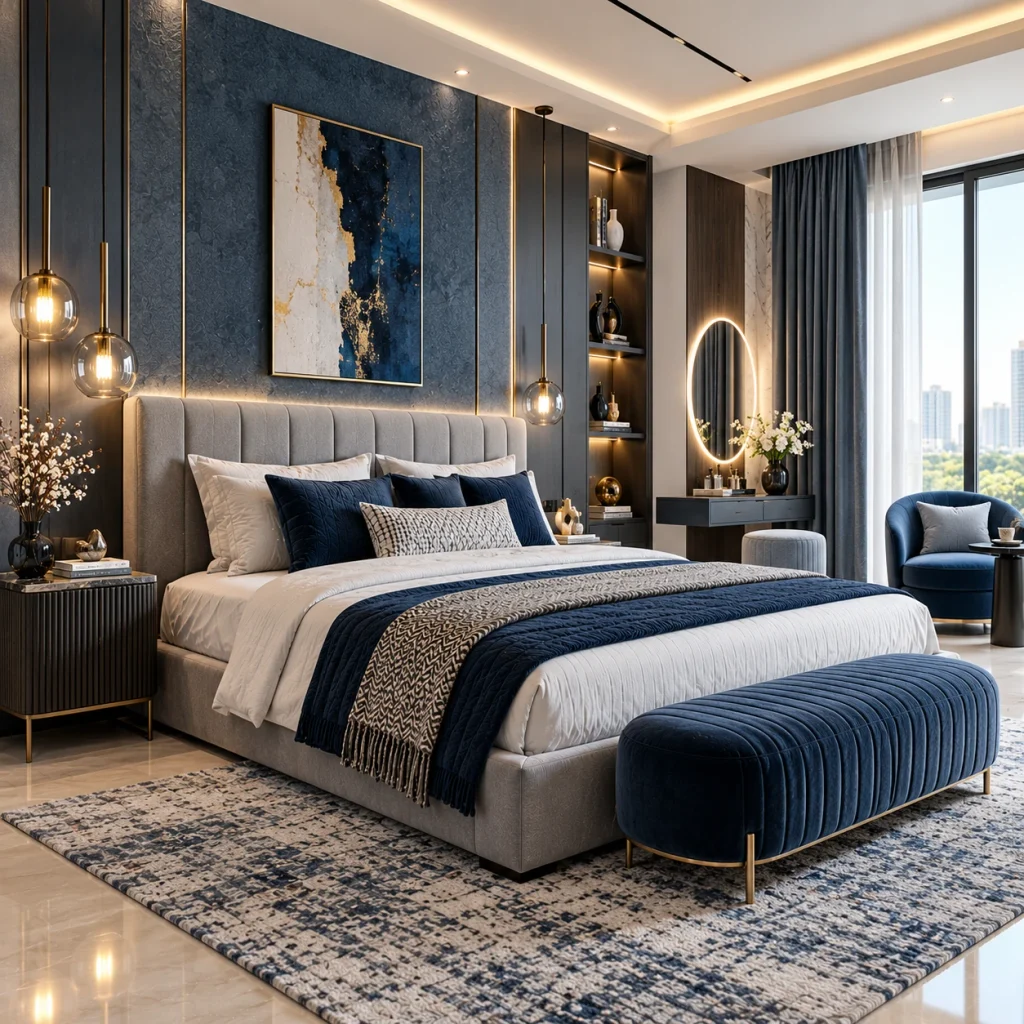
A feature wall can give your bedroom a designer finish without requiring you to decorate every surface.
The wall behind the bed often works well because it naturally draws attention. You can highlight it with a contrasting paint color, decorative wall panels, textured wallpaper, or a carefully arranged piece of artwork.
Choose a treatment that complements your headboard and bedside furniture. For example, a muted accent color can create depth behind a neutral upholstered bed, while vertical panels can introduce clean architectural lines.
Avoid combining too many statement elements in one area. If the wall already has a dramatic finish, simple bedding and understated accessories may create a better balance.
Before installing panels or wallpaper, consider maintenance, installation requirements, and how the finish will look under your bedroom lighting.
Image placeholder: A contemporary bedroom with a textured feature wall behind an upholstered bed.
7. Add Mirrors and Artwork With Purpose
Mirrors and artwork can make a bedroom feel more complete when you choose and position them carefully.
A full-length mirror can help with dressing, while a larger wall mirror may reflect available light and create a greater sense of visual depth. Position mirrors where they reflect an attractive view or a useful part of the room.
Artwork adds personality. A large abstract print above the headboard can create a focal point, while a small coordinated arrangement can suit a dressing area or side wall.
Pay attention to scale. A tiny picture can look lost above a wide bed, while oversized artwork may overwhelm a narrow wall.
Choose frames and finishes that complement the room’s other materials. Wood frames can add warmth, while simple dark or metallic frames may suit a more contemporary style.
You do not need to cover every wall. Leaving some areas open gives the eye a place to rest and helps the design feel intentional.
8. Use Curtains and Rugs to Complete the Room
Curtains and rugs bring together the colors, textures, and furniture in your bedroom.
Curtains should meet your practical needs as well as your design preferences. Consider privacy, daylight, and how much darkness you want when sleeping. Layered window treatments can provide flexibility when your room requires both filtered daylight and greater light control.
For a coordinated look, choose curtain colors that complement your walls or bedding. You can create contrast with a slightly deeper shade, but avoid introducing too many unrelated colors.
A rug can add softness and help define the bed area. Choose a size that suits the room and the furniture arrangement. A rug that is too small may look disconnected from the bed, while an oversized rug may interfere with doors or built-in storage.
Measure before buying, and consider how easily you can clean the material. The best choice is one that looks attractive and fits your daily routine.
9. Keep Storage Elegant and Clutter Under Control
A luxurious bedroom should feel restful, not crowded with items that have nowhere to go.
Use bedside drawers, wardrobes, dresser organizers, and under-bed storage to keep everyday belongings accessible but out of sight. Choose storage that matches your furniture or blends naturally with the room’s color palette.
Keep frequently used items within easy reach. Store seasonal clothing and occasional-use belongings in less accessible spaces.
Style open shelves selectively. A few books, a decorative object, or a framed photograph can create interest without turning the shelf into a storage overflow area.
Also, keep bedside surfaces practical. A lamp, a book, and a small tray may be enough for many people.
Remember that organization is part of the design. Even expensive furniture loses its impact when every surface holds unrelated objects.
10. Add Personal Details for a Designer Finish
The final layer should make the bedroom feel like yours.
Display a favorite artwork, use a meaningful decorative object, or choose bedding in colors you genuinely enjoy. Personal details help prevent a carefully styled room from feeling generic.
You can also create a small reading corner if the layout allows it. A comfortable chair, a suitable light, and a compact side table may turn an unused corner into a useful retreat.
Avoid buying accessories simply because they appear in a design trend. Before adding an item, ask yourself whether it improves the room’s appearance or function.
This approach also helps you control spending. You can refresh a bedroom gradually, starting with the elements that make the biggest difference.
Common Mistakes to Avoid in a Luxury Bedroom
Even a well-planned room can lose its appeal when the design becomes excessive or impractical.
Avoid these common mistakes:
- Overusing metallic finishes: A few coordinated accents often look more refined than gold or silver on every surface.
- Choosing furniture that’s too large: Leave enough space to move around comfortably.
- Ignoring lighting needs: Consider general, task, and accent lighting rather than relying on one source.
- Mixing too many patterns: Balance patterned fabrics with simpler surfaces.
- Buying decor without a plan: Decide how each item fits into the overall design.
- Sacrificing comfort for appearance: Choose furniture, bedding, and lighting that support your everyday routine.
A successful bedroom should look beautiful in photographs and feel comfortable when you actually use it.
Final Thoughts
Creating a beautiful bedroom doesn’t require an unlimited budget or a room filled with statement furniture. The most effective approach combines a considered color palette, comfortable bedding, suitable lighting, useful storage, and textures that work together. At Chahat Collections, we share home decor inspiration to help readers explore thoughtful ways to style their spaces and make everyday living feel more special. Start with the changes that matter most to you, keep comfort at the center of your decisions, and build a bedroom that feels elegant, personal, and easy to enjoy.
Frequently Asked Questions
1. What colors work best for modern luxury bedroom design?
Cream, beige, taupe, warm white, and soft gray provide versatile foundations. You can add depth with charcoal, terracotta, muted blue, or dark wood accents. Choose shades that complement your lighting and existing furniture.
2. How can I make my bedroom look luxurious on a budget?
Start by decluttering, rearranging furniture, and coordinating your bedding. Improve lighting, add a textured throw, update cushion covers, or introduce one carefully chosen artwork. You do not need to replace every piece of furniture to refresh the room.
3. What lighting should I use in a luxury bedroom?
Combine general lighting with task lighting for reading or dressing and accent lighting for selected design features. Choose fixtures that suit the room’s proportions, and consider dimmable options when practical.
4. Does a luxury bedroom need expensive furniture?
No. A well-proportioned layout, coordinated colors, comfortable bedding, thoughtful lighting, and carefully selected accessories can create an elegant result. Focus on how each item looks, feels, and functions rather than its price alone.