
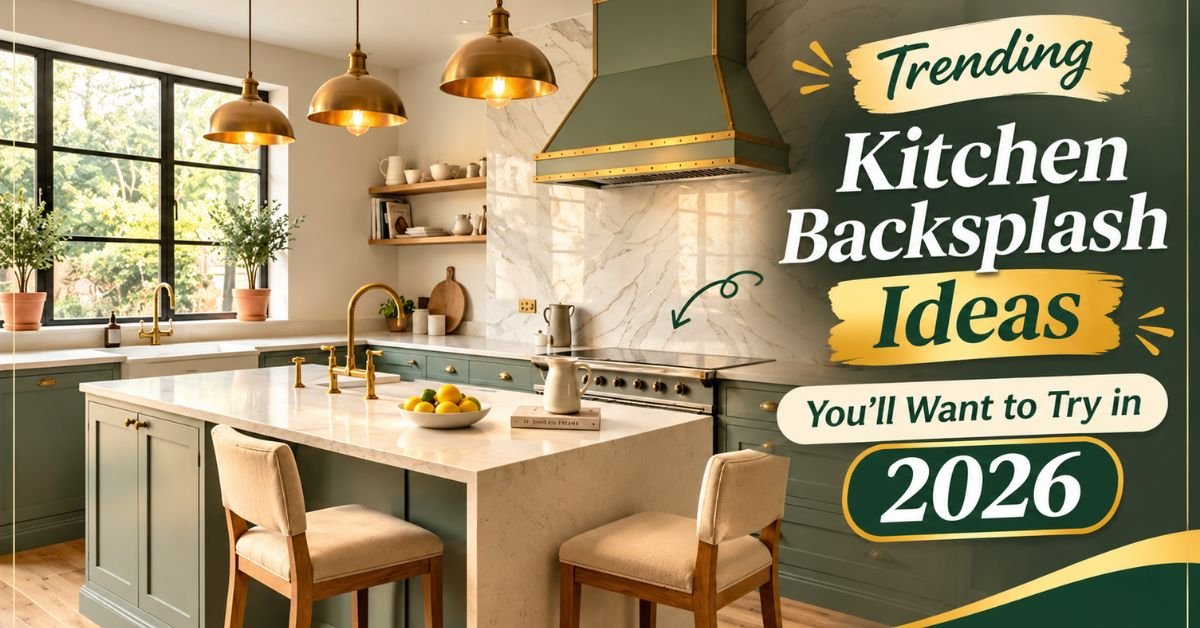
A kitchen backsplash might look like a small design detail, but it can change the entire personality of your kitchen. It protects the wall behind your cooking and preparation areas while giving you an opportunity to introduce color, texture, and character. At Chahat Collections, we share home decor inspiration and practical design ideas to help you create beautiful spaces that feel welcoming, functional, and personal.
In 2026, kitchen design is moving toward warmer colors, natural-looking materials, interesting textures, and more individual details. You can choose a simple neutral surface or turn the wall behind your stove into a statement feature. The best option depends on your kitchen, your budget, and how much maintenance you want to handle.
Let’s explore kitchen backsplash ideas that combine current design inspiration with practical everyday use.
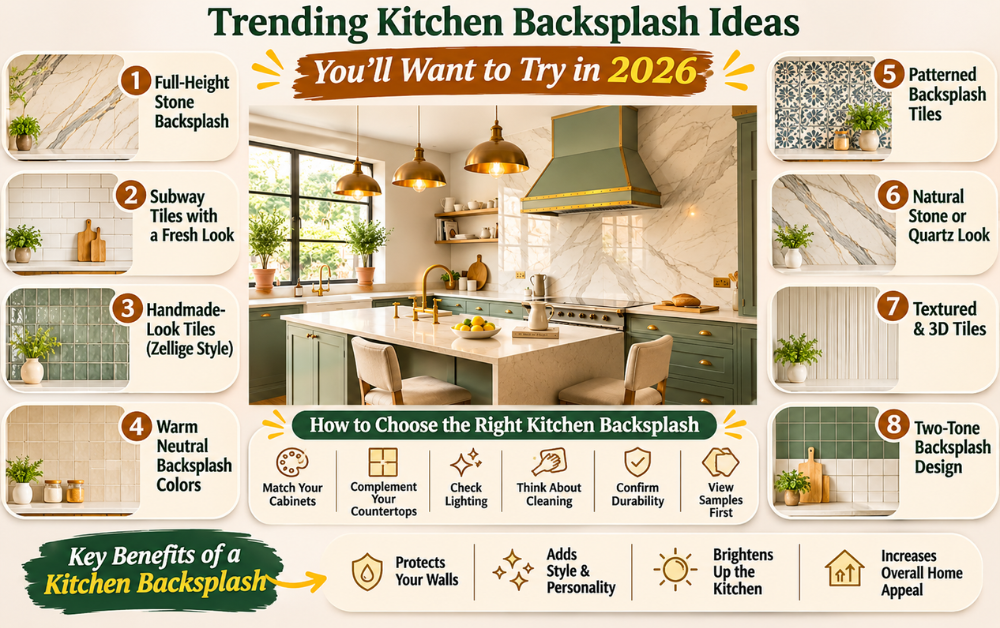
Table of Contents
What Makes a Kitchen Backsplash Worth Updating?
A backsplash covers the wall between the countertop and the cabinets, although some designs extend much higher. It helps protect the wall from cooking splashes, grease, and moisture.
But protection is only part of the story. A backsplash also connects your countertops, cabinets, and other finishes. It can make a simple kitchen feel more polished or give a neutral space a little personality.
Before choosing a design, consider three things:
- Appearance: Does the material complement your cabinets and countertops?
- Maintenance: Can you clean it easily after everyday cooking?
- Durability: Is it suitable for the heat, moisture, and activity in that area?
A beautiful backsplash should look good on installation day and remain practical after months of cooking.
1. Try a Full-Height Stone Backsplash
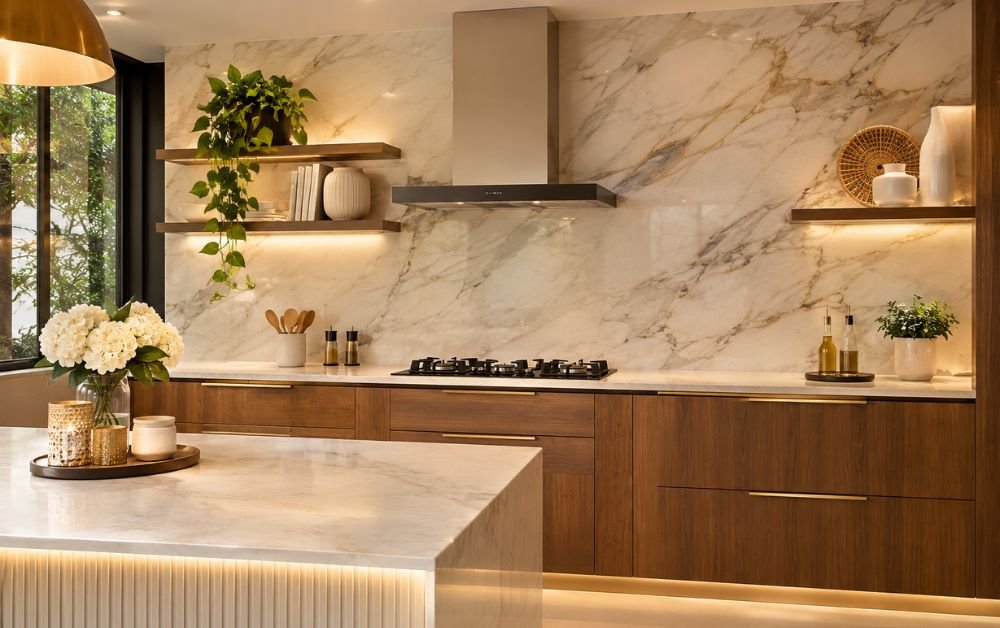
A full-height backsplash extends the surface farther up the wall instead of stopping at a short strip above the countertop. Some designs continue to the underside of upper cabinets, while others extend to the ceiling.
Marble, quartzite, and large-format porcelain can create this look. Their natural-looking patterns add visual interest without requiring a complicated tile layout.
A stone slab with subtle veining works particularly well with simple cabinetry. It creates a continuous surface and reduces the number of visible grout joints.
If you want a dramatic appearance, choose a stone pattern with more noticeable movement. For a calmer kitchen, look for gentle veining and a softer finish.
Design tip: Check the actual slab or a large sample before making a decision. Small samples may not show the full pattern or variation.
2. Give Classic Subway Tiles a Fresh Look
Subway tiles remain a familiar choice, but you can update the traditional look with different sizes, colors, finishes, and layouts.
Instead of choosing only standard white rectangular tiles, consider:
- Longer rectangular tiles.
- Soft cream or warm gray finishes.
- Glossy handmade-look surfaces.
- Vertical stacked arrangements.
- Contrasting grout for a defined pattern.
A horizontal brick layout creates a classic appearance, while vertical stacking gives the wall a cleaner, more contemporary feel.
According to the 2026 kitchen study published by Houzz, rectangular tiles remain the most selected shape among homeowners choosing tile backsplashes. Horizontal brick remains the leading tile pattern in that group. This shows that familiar layouts still have a place in modern kitchens.
The trick is to choose a version that suits your cabinets and countertops rather than using a pattern simply because it is popular.
3. Add Character With Handmade-Look Tiles
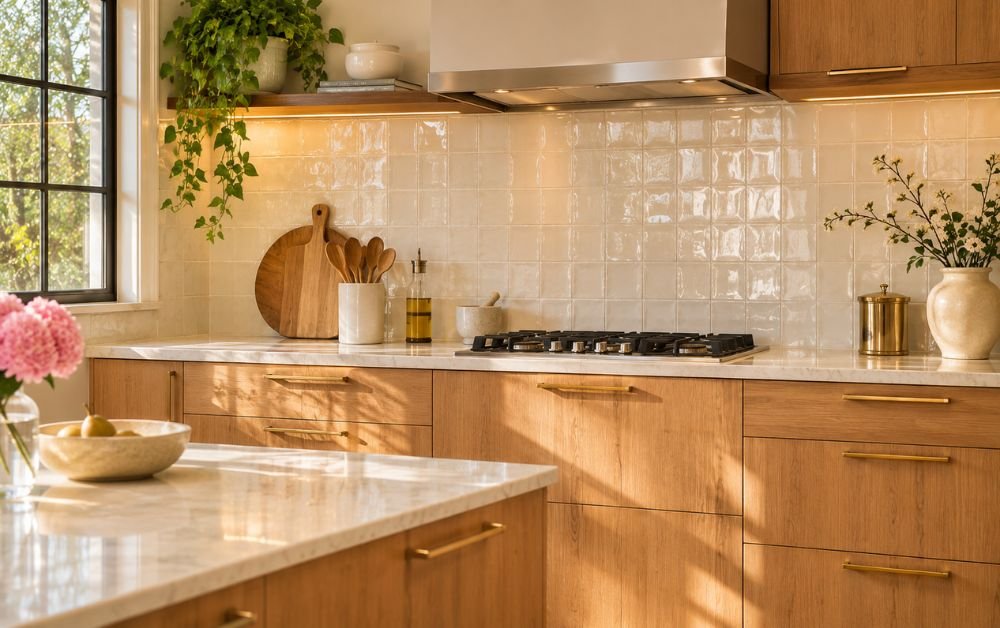
If perfectly uniform surfaces feel too plain, handmade-look tiles offer a more individual appearance.
Zellige-inspired and artisan-style tiles often feature subtle variations in color, glaze, and surface texture. These small differences create depth when light falls across the wall.
They work well with natural wood cabinets, warm metal hardware, stone countertops, and simple kitchen accessories.
You can use them across the entire backsplash or limit them to a smaller area behind the stove.
Keep in mind that textured or uneven surfaces may need more attention during cleaning. Check the tile manufacturer’s care instructions and ask your installer about grout and sealing requirements.
4. Explore Warm Neutral Kitchen Backsplash Colors
Warm neutrals are a practical choice when you want a kitchen that feels inviting and easy to coordinate.
Consider shades such as:
- Cream.
- Warm white.
- Beige.
- Taupe.
- Sand.
- Soft mushroom.
These colors work with many cabinet finishes, including natural wood, white, charcoal, and muted green.
You can also combine two neutral shades to create gentle contrast. For example, warm cream tiles can complement darker beige cabinets without making the kitchen feel visually busy.
Do not assume that neutral means boring. Texture, tile shape, grout color, and lighting can give a simple color palette plenty of personality.
5. Make a Statement With Patterned Backsplash Tiles
Patterned tiles can turn an ordinary kitchen wall into a focal point.
Geometric designs, decorative motifs, and traditional-inspired patterns can add character, especially when the rest of the kitchen has simple cabinets and countertops.
You can use patterned tiles behind the stove or across a smaller section of the wall. This creates a decorative feature without making the entire kitchen feel crowded.
When choosing a pattern, consider the scale. Large designs can work well on a spacious wall, while smaller patterns may suit a compact backsplash.
Keep nearby finishes relatively simple. If your cabinets, countertop, and backsplash all compete for attention, the kitchen may feel too busy.
6. Choose a Natural Stone or Quartz-Look Surface
Natural stone and stone-look surfaces can give a kitchen a refined appearance.
Marble, quartzite, and porcelain surfaces offer different patterns and visual effects. Some feature dramatic veining, while others have a quieter, more consistent appearance.
A backsplash that continues the countertop material can create a coordinated look. This approach works particularly well when you want fewer visual interruptions.
However, do not assume every stone surface has the same maintenance needs. Natural stone may require sealing and specific cleaning products, depending on the material. Engineered and porcelain surfaces have different care requirements.
Ask about stain resistance, heat suitability, sealing, and cleaning before choosing a material.
7. Use Vertical Stack Tiles for a Modern Finish
Tile placement can change the way a backsplash looks, even when you use a simple rectangular tile.
A vertical stack arrangement places rectangular tiles directly above one another. The result feels clean and structured.
This pattern works particularly well with narrow tiles, simple cabinetry, and minimalist kitchen designs.
You can use a matching grout color for a subtle finish or a contrasting grout for more definition.
Before installation, ask your tile installer to create a small layout sample. This helps you see how the tile size, grout spacing, and pattern work together.
8. Bring Depth With Textured and Three-Dimensional Tiles
A backsplash does not need a bold color or complicated pattern to stand out. Texture can do the work.
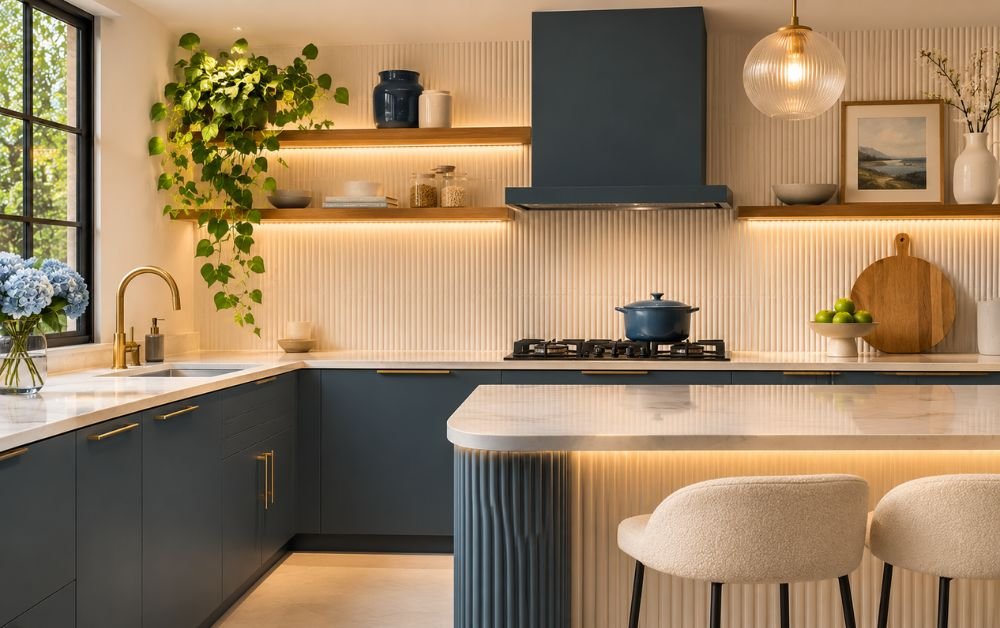
Fluted, ribbed, gently raised, and sculptural tiles create shadows and visual depth. They can make a simple kitchen feel more detailed without introducing too many colors.
Use textured tiles in areas where you can clean them comfortably. Deep grooves and uneven surfaces may collect cooking residue more easily than smooth finishes.
If easy maintenance matters most, choose a subtle texture rather than a heavily sculpted design.
Image prompt: A contemporary kitchen featuring softly fluted cream backsplash tiles, warm oak cabinets, pale stone countertops, understated brass fixtures, soft natural light, realistic interior photography, 16:9.
9. Consider a Glass or Glossy Tile Backsplash
Glossy tiles can reflect light and add brightness to a kitchen. Glass tiles also offer a smooth, modern appearance in a variety of colors and sizes.
They work well in kitchens that need a little more visual brightness, particularly when the surrounding cabinets and countertops have matte finishes.
However, glossy surfaces may show fingerprints, water spots, and smudges more clearly. Consider how much cleaning you are comfortable doing before choosing them.
A soft-gloss or satin finish can offer a middle ground if you prefer a little reflection without an overly shiny appearance.
10. Try a Two-Tone Backsplash Design
A two-tone backsplash uses two complementary colors or finishes to create a more personalized look.
For example, you might use:
- Cream tiles with a muted green accent strip.
- White tiles with a darker section behind the stove.
- Beige tiles with a decorative border.
- Matte tiles with a small glossy feature area.
The key is to create a clear design plan. Randomly mixing colors can make the wall look unfinished.
Choose one main finish and use the second as an accent. This keeps the design balanced and allows the backsplash to work with the rest of the kitchen.
11. Use a Countersplash for a Seamless Appearance
A countersplash continues the countertop material up the wall, creating a connected surface.
For example, a quartz countertop can continue vertically behind the sink or cooking area. The result feels simple and coordinated because the countertop and backsplash share the same material.
This approach can work well in modern kitchens with flat cabinet fronts and minimal decoration.
It also reduces the number of grout joints compared with many small-tile layouts. However, installation requires careful measurement, fabrication, and fitting.
If you prefer a clean, understated kitchen, this option deserves consideration.
12. Add a Decorative Backsplash Behind the Stove
The wall behind the stove naturally attracts attention. It is also one of the areas that experiences frequent cooking splashes.
You can make this section stand out with a decorative tile panel, a different layout, or a suitable stone surface.
A patterned tile insert can create a focal point while the surrounding backsplash remains simple. Alternatively, use the same tile throughout and introduce a decorative border.
Always check that the selected material and installation method suit the cooking appliance and its heat requirements. Follow the appliance manufacturer’s clearance guidance and use a suitable range hood.
A beautiful design should never come at the expense of safety or easy cleaning.
How to Choose the Right Kitchen Backsplash
Trends can help you discover new ideas, but your kitchen should guide the final decision.
Use this simple checklist before buying:
1. Look at your cabinets first. Choose a backsplash that complements their color and finish.
2. Compare it with the countertop. Place samples beside the actual countertop material rather than relying on online photos.
3. Check the lighting. A tile can look different under warm artificial light and natural daylight.
4. Think about cleaning. Smooth surfaces and suitable grout can make regular maintenance easier.
5. Confirm the installation requirements. Ask about substrate preparation, grout, sealing, and heat suitability.
6. Order samples. View them in your kitchen at different times of the day before making a final choice.
If you are also planning a compact kitchen renovation, explore our guide to Small Open Kitchen Design Ideas That Make Your Home Look Bigger.
Common Kitchen Backsplash Mistakes to Avoid
Even a beautiful tile can disappoint when the design or installation does not suit the kitchen.
Watch out for these common mistakes:
- Ignoring the countertop: A backsplash should complement the countertop rather than compete with it.
- Choosing a difficult-to-clean texture: Deep grooves may collect grease and cooking residue.
- Using too many patterns: Several strong patterns can make the kitchen feel visually crowded.
- Skipping sample checks: Online colors may look different in your actual lighting.
- Ignoring grout selection: Grout color and joint size affect the final appearance and maintenance.
- Forgetting installation details: Poor preparation or unsuitable materials can lead to problems later.
Plan the design around your cooking habits, available space, and maintenance preferences. That will help you choose a backsplash you can enjoy long after the latest trend changes.
Final Thoughts
The best kitchen backsplash is one that combines attractive design with everyday practicality. Whether you prefer handmade-look tiles, a dramatic stone slab, warm neutral colors, or a decorative pattern, choose a finish that works with your cabinets, countertops, lighting, and cooking routine. At Chahat Collections, we share home decor inspiration to help you explore fresh ideas and make thoughtful choices for every part of your home. A well-chosen backsplash can give your kitchen a fresh personality without requiring a complete makeover.
My Takeaway
While exploring these kitchen backsplash ideas, I realized that even a small change can make a kitchen feel completely different. I personally love designs that look beautiful but are also easy to clean and maintain. My advice? Don’t follow every trend. Choose something that feels right for your kitchen and everyday lifestyle.
Frequently Asked Questions
1. What kitchen backsplash styles are popular in 2026?
Current design directions include full-height stone surfaces, handmade-look tiles, warm neutral colors, textured finishes, decorative patterns, and updated rectangular tile layouts. The right choice depends on your kitchen and personal style.
2. What is the easiest backsplash material to clean?
Smooth, nonporous surfaces such as suitable glazed ceramic or porcelain tiles are often practical choices. The grout and installation also affect cleaning, so check the manufacturer’s care instructions before buying.
3. Should a backsplash match the countertop?
It does not need to match exactly. You can choose complementary colors or textures. Using the same material for both can create a seamless appearance, while contrasting finishes can add character.
4. Are full-height backsplashes worth considering?
Yes, if you want a continuous look and fewer visible grout joints. They can create a strong focal point, but material, fabrication, and installation costs may be higher than a basic tile backsplash.
5. Which backsplash color works best with white cabinets?
White cabinets pair well with warm beige, cream, gray, soft green, muted blue, and natural stone finishes. Choose a shade that also complements your countertop and flooring.
Contact Chahat Collections
Have questions about home decor or want to share your ideas? Visit our Contact Us page to get in touch with Chahat Collections.