
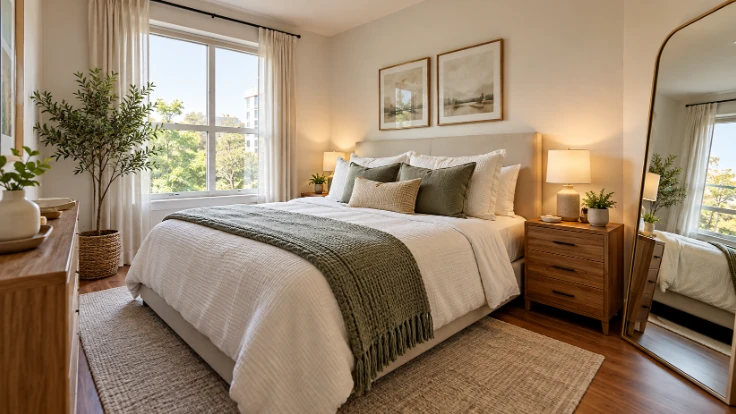
A small bedroom does not have to feel like your bed, dresser, and laundry basket are competing for the same three feet of floor space.
With the right layout, furniture, lighting, colors, and storage, even a compact bedroom can feel more open and comfortable. The goal is not to magically add square footage. It is to make better use of the space you already have.
The best small bedroom ideas focus on two things: reducing visual clutter and making every piece of the room work harder.
Interior designers often use lighter color palettes, carefully scaled furniture, mirrors, built-in storage, and multiple light sources to make smaller bedrooms feel more spacious.
Here are practical ways to bring those ideas into your own bedroom.
Start With the Layout
Before buying anything new, look at how your furniture is arranged.
A small room can feel even smaller when furniture blocks walking paths or sits in awkward positions. Start with the bed because it usually takes up the largest amount of floor space.
Try different placements and pay attention to how easily you can move around the room.
You do not necessarily need to push every piece against a wall. The better approach is to create a layout that leaves useful walking space and avoids unnecessary obstacles.
Furniture scale matters, too. A huge bed frame, oversized dresser, and bulky nightstands can overwhelm a compact bedroom even when the room technically fits everything.
Architectural Digest’s design experts similarly recommend using minimal furniture and paying attention to the scale of each piece when trying to make a small bedroom feel larger.
In other words, your bedroom does not need more furniture. It needs the right furniture.
Choose a Light, Simple Color Palette
Color can dramatically change how a room feels.
A lighter base can help a small bedroom feel brighter and more open, particularly when natural light is available. Designers also often recommend using related tones throughout the room to reduce visual breaks.
That does not mean everything needs to be plain white.
Soft beige, warm white, pale gray, muted blue, and other light tones can create a calm foundation. You can then add personality through bedding, artwork, rugs, pillows, or small decorative pieces.
A monochromatic or closely related palette can make the room feel more continuous because the eye encounters fewer strong visual interruptions. Architectural Digest recently highlighted this approach when discussing ways designers visually expand small bedrooms.
Think of it as giving your eyes fewer speed bumps.
Use Mirrors to Add Visual Depth
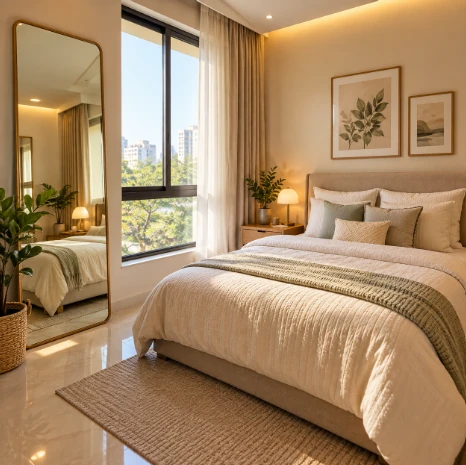
A well-placed mirror can make a small bedroom feel more open by reflecting light and creating the impression of additional depth.
You can place a large mirror opposite or near a window so it reflects natural light into the room. Mirrored closet doors can also combine a practical function with a visual one.
The trick is placement.
A mirror does not automatically make every room look bigger. What it reflects matters. A mirror facing a cluttered corner will simply give that clutter a second appearance.
Designers use mirrors as spatial tools because reflections can extend the perceived depth of a room and amplify available light.
Take Storage Off the Floor
Floor space is valuable in a small bedroom.
Instead of adding another bulky cabinet, look upward.
Floating shelves, wall-mounted storage, tall shelving, and other vertical solutions can provide useful storage without taking up as much floor area.
You can also look at the space underneath your bed. A storage bed or suitable under-bed containers can provide a place for items that you do not need every day.
Architectural Digest’s small-bedroom storage guidance highlights under-bed storage, floating shelves, vertical storage, and multifunctional furniture as practical ways to handle limited space.
The key is to avoid turning every wall into a storage unit. The room should still feel like a bedroom, not a very stylish warehouse.
Pick Furniture That Does More Than One Job
Small bedrooms benefit from furniture that earns its place.
A bed with built-in storage can handle some of your organization needs. A nightstand with drawers can provide both a surface and hidden storage. A bench with storage can offer seating while giving blankets or pillows somewhere to live.
A daybed can also work well in certain layouts, especially when the bedroom needs to serve more than one purpose.
Multifunctional furniture is a recurring solution in small-space design because it allows one item to perform several jobs without requiring several separate pieces.
Before adding furniture, ask a simple question:
What else can this piece do?
If the answer is “nothing,” make sure you really need it.
Keep the Bed Area Visually Clean
The bed is normally the visual center of a bedroom, so it naturally attracts attention.
That makes the area around it important.
Instead of filling the headboard wall with multiple unrelated decorations, consider one strong focal point. A simple piece of artwork, a mirror, a textured headboard, or carefully chosen bedding can create interest without overwhelming the room.
You can also reduce the number of objects sitting on your nightstand.
A lamp, book, and one decorative item may be enough. Your nightstand does not need to host an entire civilization.
Keeping surfaces organized makes the room easier to maintain and can contribute to a calmer visual appearance.
Use Lighting in Layers
One ceiling light rarely does a small bedroom any favors.
It can provide general illumination, but additional light sources can make the room feel warmer and more flexible.
Consider combining:
- An overhead light for general illumination
- A bedside lamp for reading
- Wall sconces when bedside surface space is limited
- Soft accent lighting for atmosphere
Architectural Digest’s recent small-bedroom guidance specifically points to wall sconces and additional ambient lighting as useful solutions when floor and surface space are limited.
Multiple light sources also allow you to change the mood of the room without turning on every light at once.
Make the Walls Work Harder
When floor space is limited, walls become valuable real estate.
A narrow floating shelf can hold books or small decorative objects. Wall-mounted lighting can free a nightstand. Tall storage can use vertical space that would otherwise remain unused.
You can also use artwork to draw the eye upward.
The idea is not to cover every available inch of wall. Instead, choose a few elements that provide either function, personality, or both.
This balance matters because excessive decoration can quickly create visual clutter.
Keep Window Areas Uncomplicated
Natural light can make a compact bedroom feel more open.
If your room has a window, avoid unnecessarily blocking it with bulky furniture when the layout allows. Keep the surrounding area relatively simple so daylight can move through the room.
Light-colored or lightweight window treatments can also help maintain an airy appearance.
The goal is not to remove curtains completely. It is to avoid making the window feel like another heavy object competing for attention.
Use Similar Tones to Create Continuity
You do not have to match every item in the bedroom.
But using a related palette across your bedding, rug, curtains, walls, and larger furniture can create a more connected appearance.
For example, a room could combine warm white walls, beige bedding, light wood furniture, and muted tan textiles.
Small accents can then introduce contrast.
This approach gives you flexibility without creating too many competing visual elements.
IKEA also uses restrained palettes and smart storage in its examples of compact bedrooms, showing how simple colors, flexible furniture, and organization can work together in smaller spaces.
Don’t Try to Fit Everything
This may be the hardest small-bedroom idea of all.
Sometimes the best way to make a bedroom feel bigger is to remove something.
If you rarely use an extra chair, oversized side table, decorative cabinet, or pile of accessories, consider whether it deserves the space it occupies.
Small rooms reward editing.
That does not mean your bedroom needs to become completely minimalist. You can still have books, artwork, plants, colorful bedding, and personal objects.
The difference is intentionality.
Keep the things you love and use. Give everything else a second thought.
Small Bedroom Ideas That Actually Make a Difference
If you are trying to make a tiny bedroom feel more spacious, start with the changes that affect the room most:
- Rework the furniture layout to improve movement.
- Choose appropriately sized furniture instead of oversized pieces.
- Use lighter or related colors to create visual continuity.
- Add a strategically placed mirror to reflect light and depth.
- Use vertical and under-bed storage to protect floor space.
- Choose multifunctional furniture whenever practical.
- Layer your lighting instead of relying on one ceiling fixture.
- Reduce unnecessary objects from floors and surfaces.
- Keep windows visually open so natural light can do its job.
- Decorate intentionally instead of filling every empty wall.
These are not tricks for making a bedroom physically larger. They are design decisions that can change how you experience the available space.
Final Thoughts
A small bedroom does not need to feel like a design compromise.
The most effective approach is to think about layout, light, storage, scale, and visual clutter as one system. A mirror works better when it reflects light. Storage works better when it keeps the floor clear. Light colors work better when the room is not overloaded with furniture.
And good furniture choices can make a surprisingly large difference without requiring a renovation.
Start small. Move the furniture. Clear one surface. Add better lighting. Reconsider the storage. Then see how the room feels.
You might discover that your bedroom was never really too small. It just needed a better plan.
Sources & Further Reading
- Google Search Central — guidance on creating helpful, reliable, people-first content.
- Google Search Essentials — core guidance for making content eligible to appear in Google Search.
- Google SEO Starter Guide — recommendations for useful, readable, well-organized and original content.
- Architectural Digest — designer advice on making small bedrooms feel larger through furniture scale, color, mirrors, and built-ins.
- Architectural Digest — small-bedroom storage ideas including vertical storage, floating shelves, multifunctional furniture, and under-bed storage.
- IKEA — examples of compact-bedroom planning, flexible furniture, storage, and organization.
Note: The recommendations above are based on the cited design guidance and practical space-planning principles. They are not presented as guaranteed methods for making a room physically larger.
Frequently Asked Questions
1. What colors make a small bedroom look bigger?
Light and soft colors such as warm white, beige, pale gray, and muted pastels can help a small bedroom feel brighter and more open. You can still add darker or bolder colors through pillows, artwork, rugs, or other smaller accents.
2. How can I make a small bedroom feel bigger without renovating?
Start by improving the furniture layout and removing unnecessary pieces. Use vertical storage, under-bed storage, mirrors, lighter colors, and layered lighting. Keeping the floor and major surfaces relatively clear can also make the room feel less crowded.
3. What type of furniture is best for a small bedroom?
Choose furniture that fits the room’s scale and, when possible, serves more than one purpose. Beds with storage, narrow nightstands, wall-mounted lighting, and compact dressers can provide useful functions without taking up unnecessary space.