
A small bedroom can feel comfortable, stylish, and organized without knocking down a single wall. Sometimes, the biggest improvement comes from moving a dresser, changing the bed frame, or finally finding a proper home for those extra blankets.
At Chahat Collections, we believe beautiful home decor should work with your space, not against it. You do not need a huge bedroom or an unlimited decorating budget to create a room that feels welcoming and practical.
The secret lies in making thoughtful choices about furniture, storage, lighting, colors, and layout.
The best small bedroom ideas focus on using the space you already have. Instead of squeezing another cabinet into an already crowded room, look for opportunities to make existing furniture more useful and everyday movement more comfortable.
Let’s explore simple ways to create more space without renovation, expensive construction, or unnecessary purchases.
1. Rearrange Your Furniture Before Buying Anything
Before shopping for new furniture, take a fresh look at your bedroom layout.
The bed usually occupies the largest area, so its position affects everything else. If it blocks a closet, crowds a doorway, or creates an awkward walking path, the entire room can feel smaller than necessary.
Try placing the bed against a suitable wall and repositioning your dresser or nightstand. Keep the routes between the bed, closet, and doorway as clear as possible.
You do not need to follow a rigid decorating rule. The best arrangement depends on your room’s dimensions, windows, doors, and daily routine.
Measure Before You Move
Measure the room and furniture before making major changes. A simple sketch can help you test different arrangements without repeatedly moving heavy pieces.
Check whether drawers open fully and whether you can comfortably reach the closet and windows.
A furniture layout might look attractive in a photograph, but it should also work when you are getting dressed on a busy morning.
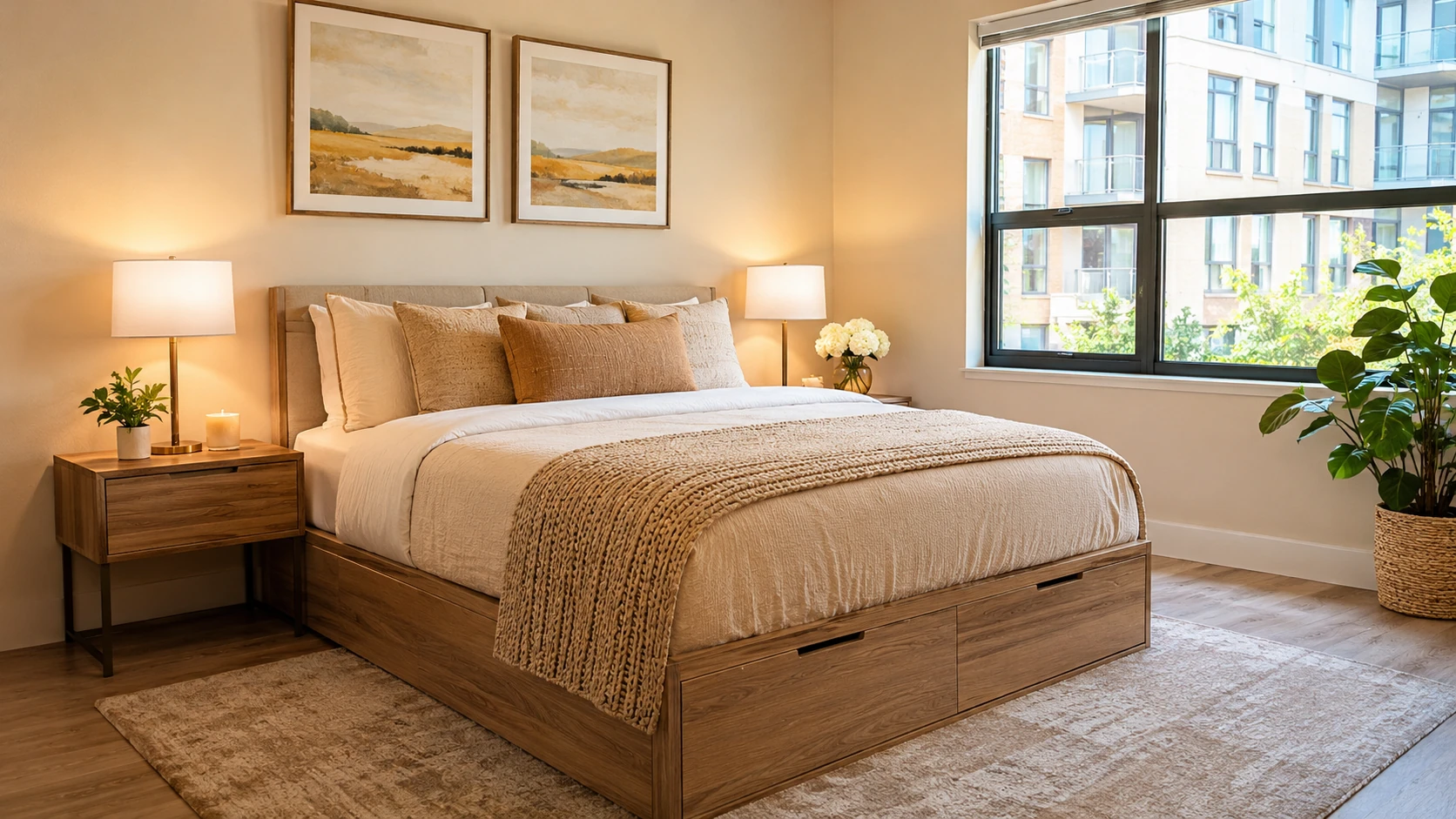
2. Choose a Bed That Offers Extra Storage
Your bed should provide comfort, but it can also help solve storage problems.
A bulky bed frame may occupy valuable space without offering any additional function. If you need more storage, consider a bed with built-in drawers or enough clearance for containers underneath.
You can store spare bedding, seasonal clothing, extra pillows, and other items you do not need every day.
Before purchasing a storage bed, check its dimensions and drawer clearance. If the bed sits close to a wall or another piece of furniture, you may not have enough room to open the drawers comfortably.
Another option is to use suitable under-bed containers with lids. They can help keep belongings organized without introducing another cabinet into the room.
The goal is to use space that already exists rather than creating a new storage problem.
3. Use Vertical Space Instead of Adding More Cabinets
When floor space becomes limited, look at your walls.
Floating shelves, wall-mounted organizers, and tall storage units can hold books, accessories, and everyday essentials without requiring several separate pieces of furniture.
You can also install a shelf above a desk or use suitable wall space for items that currently occupy your dresser.
Keep frequently used belongings within easy reach. Reserve higher shelves for items you rarely need.
Make sure shelves are properly secured and follow installation instructions, particularly when placing them above a bed.
At Chahat Collections, we recommend choosing storage solutions that balance usefulness with appearance. A few well-organized shelves can look attractive without turning every wall into a storage display.
Remember, the goal is to create more usable space, not to fill every empty corner.
4. Replace Bulky Furniture With Compact Alternatives
Sometimes, the problem is not the bedroom itself. It is the amount of space your furniture consumes.
A wide nightstand may offer more surface area than you need. A deep dresser might block a walking path. A large accent chair could occupy a corner that would work better without it.
Consider these practical alternatives:
- Replace a bulky nightstand with a narrow table or floating shelf.
- Choose a compact dresser that meets your storage needs.
- Use wall-mounted lighting when bedside space is limited.
- Consider a small desk if you occasionally work in your bedroom.
- Remove decorative furniture that serves no practical purpose.
You do not need to replace everything at once. Start with the piece that creates the biggest obstacle.
Measure the width, depth, and height of any new furniture before purchasing it. Also check whether doors and drawers can open comfortably.
A beautiful dresser is not much help if opening it requires moving the bed first.
5. Use Mirrors to Create a More Open Feel
Mirrors can help a small bedroom feel brighter by reflecting available light and creating a sense of visual depth.
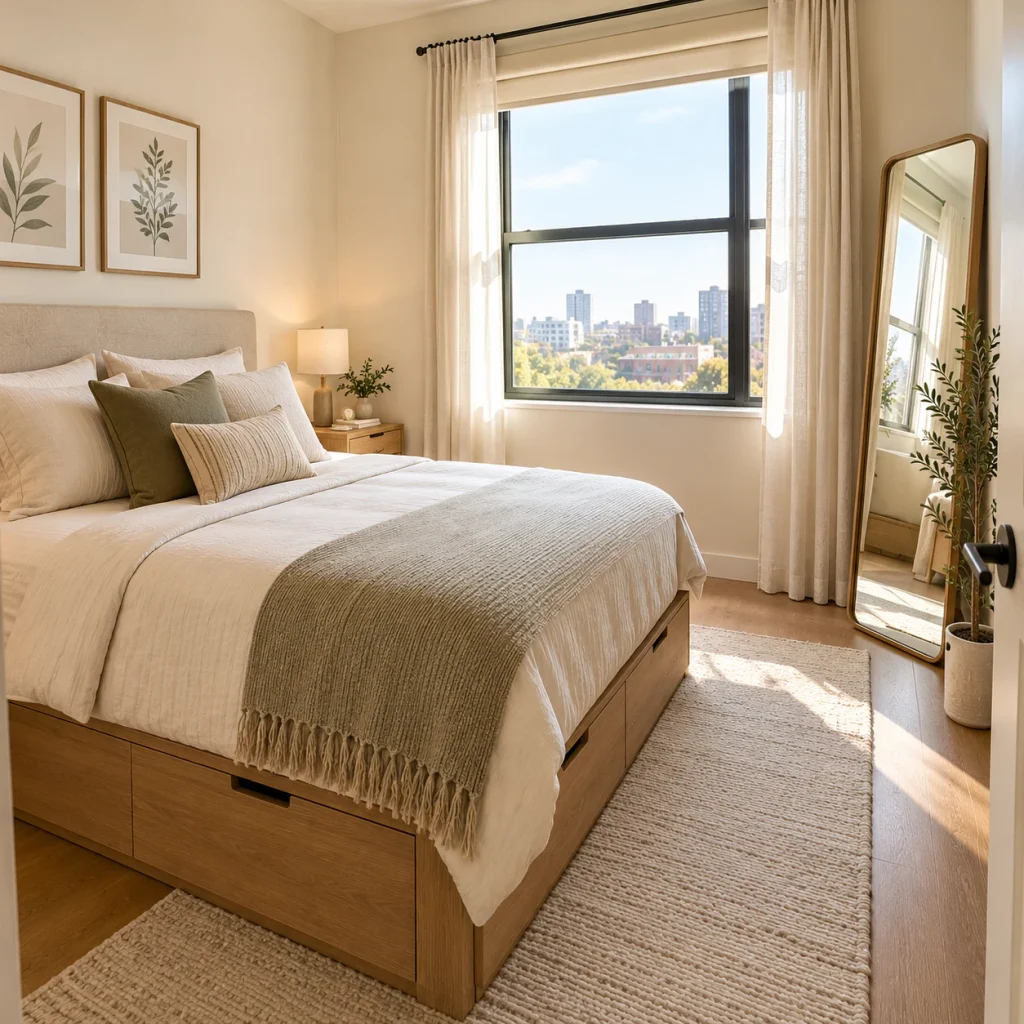
A full-length mirror near a window can serve a practical purpose while reflecting daylight into the room. Mirrored closet doors can also provide a dressing mirror without requiring a separate floor-standing piece.
Placement matters more than simply buying the largest mirror available.
Choose a position that reflects natural light or a pleasant part of the room. A mirror facing a cluttered corner will simply give that clutter more attention.
You do not need several mirrors. One thoughtfully placed mirror can provide both function and visual interest.
6. Choose Colors That Help the Room Feel Connected
Color can influence how spacious and comfortable a bedroom feels.
A coordinated palette of warm white, beige, soft gray, or muted blue can create a calm, continuous appearance. You can introduce stronger colors through artwork, pillows, blankets, or small decorative accents.
You do not have to paint every surface white. Darker colors can also look beautiful in small bedrooms when you use them thoughtfully.
For example, warm white walls, beige bedding, and light wood furniture can create a cohesive look. A contrasting throw or colorful artwork can add personality without overwhelming the space.
The key is to avoid introducing so many competing colors and patterns that the room feels visually busy.
At Chahat Collections, we encourage homeowners to choose colors that reflect their personal style while keeping the overall room balanced.
Your bedroom should feel like your own retreat, not a showroom you are afraid to touch.
7. Improve Lighting Without Remodeling
Good lighting can make a bedroom more comfortable and functional.
Instead of relying entirely on one overhead fixture, consider adding a bedside lamp, wall sconce, or another suitable light source.
Different lights serve different purposes. An overhead fixture provides general illumination, while a bedside lamp supports reading and softer evening lighting.
Wall-mounted lighting can also free up space on a narrow nightstand.
If your bedroom has a window, avoid blocking it unnecessarily with furniture. Choose window treatments that provide the privacy you need while allowing natural light into the room when appropriate.
You do not need expensive smart lighting or complicated installations. Sometimes, repositioning a lamp or changing a lampshade can improve the atmosphere.
8. Make Unused Corners Work for You
Small bedrooms often contain awkward spaces that seem difficult to use.
A narrow corner might accommodate a slim shelf. The space beneath a window could suit a low storage unit. An unused wall might hold a compact desk or a few carefully arranged shelves.
Before adding anything, decide what the area needs to accomplish.
If you need clothing storage, an organizer may be the best choice. If you occasionally work from your bedroom, a small desk could provide a practical solution.
However, do not fill every empty corner simply because you can.
Open space has value, too. It allows you to move comfortably and prevents the room from feeling overloaded.
The best solution depends on your daily habits and the dimensions of your bedroom.
9. Reduce Visible Clutter With Better Organization
Even a well-designed bedroom can feel crowded when clothes, cables, accessories, and miscellaneous belongings cover every surface.
Start by deciding where everyday items should live.
Use drawer organizers for smaller belongings, baskets for suitable accessories, and under-bed containers for things you rarely use. Keep frequently used items accessible and store seasonal belongings elsewhere when practical.
Try a simple routine: spend a few minutes returning items to their proper places before going to bed.
You do not need to become a minimalist overnight. You simply need fewer things competing for attention.
And no, putting everything into one enormous basket does not count as a complete organization system. It just creates a mystery basket.
10. Decorate With Fewer, More Meaningful Details
A small bedroom can still reflect your personality.
Choose a few decorative elements that add warmth or interest, such as artwork, textured bedding, a favorite photograph, or a small plant if the room’s light and conditions suit it.
You can create a focal point with a headboard, an attractive bedding combination, or one piece of wall art.
Avoid spreading too many small decorations across every shelf and surface. Instead, leave some breathing room around the pieces you love.
The goal is not to remove personality. It is to give your favorite details the attention they deserve.
For more home decor inspiration, Chahat Collections can help readers explore ideas for creating comfortable, attractive spaces that suit their needs and personal preferences.
11. Design Your Bedroom Around Your Daily Routine
The most effective small bedroom ideas solve real problems.
If you get dressed in your bedroom, make clothing storage easy to reach. If you read before sleeping, keep a book and a suitable light near the bed. If you work from home occasionally, create a compact workspace that does not interfere with sleeping.
You may also want to separate different activities visually. A small rug can help define a seating area, while a shelf can organize a work corner.
You do not need a separate zone for every activity. In a small bedroom, one well-planned area can serve several purposes.
Think about the activities you perform most often and arrange the room around them.
The best layout is the one that supports your routine, not the one that looks perfect in a photograph.
A Simple Plan to Create More Space Without Renovation
If you want to start today, follow these steps:
- Measure your bedroom and furniture.
- Rearrange the bed to improve walking paths.
- Remove furniture you rarely use.
- Organize items under the bed and inside drawers.
- Use vertical storage where practical.
- Improve lighting and keep windows reasonably clear.
- Choose a coordinated color palette.
- Add only decorations that improve the room.
- Check whether doors, drawers, and closets open comfortably.
- Live with the new arrangement before buying more furniture.
Work through the list gradually. You can make useful improvements without purchasing everything at once.
Frequently Asked Questions
1. How can I make my small bedroom feel bigger without renovation?
Start by improving the furniture layout and removing unnecessary pieces. Use vertical storage, keep walking paths clear, and consider a well-placed mirror. Coordinated colors and layered lighting can also help the room feel brighter and more open.
2. What furniture is best for a small bedroom?
Choose furniture that fits the room and serves a clear purpose. Beds with built-in storage, slim nightstands, compact dressers, and wall-mounted lighting can help you use limited space more efficiently. Measure carefully before buying anything.
3. How can I add storage to a small bedroom without making it crowded?
Use under-bed containers, floating shelves, tall storage, and furniture with built-in drawers. Keep everyday items accessible and store less frequently used belongings out of sight. Avoid adding more storage furniture than the room can comfortably accommodate.
Final Thoughts
You do not need to move walls to make a small bedroom work better.
Start with the layout, choose furniture that fits, make use of vertical and hidden storage, and improve the way light moves through the room. Then add colors and decorations that reflect your style without overwhelming the space.
The biggest improvements often come from small, thoughtful decisions rather than expensive purchases.
At Chahat Collections, our goal is to help readers discover practical home decor inspiration that makes everyday spaces more comfortable, organized, and beautiful.
A bedroom should support your daily life, help you relax, and give your belongings a sensible home. With a little planning, even a compact room can feel more spacious and inviting.
And if you can finally walk to your closet without bumping into a nightstand, consider that a very successful design upgrade.
The recommendations in this article are practical design suggestions. Results depend on the room’s dimensions, layout, lighting, and existing furniture. These ideas can improve how you use and experience a space, but they do not increase its physical dimensions.